Press "Enter" to skip to content

Tag: Editing

Can’t Travel? Feeling Isolated? Cross International Borders with a Book!

Image source: https://www.pickpik.com/map-open-book-reading-glasses-various-book-books-76340

Posted by Kira Baran, GD Fiction Editor for 9.1

Has the COVID-19 pandemic got you feeling isolated? Yeah, us too. But I’ll let you in on a little secret. We might just have a remedy for that!

In my last Gandy Dancer blog post, I talked about the fact that less than three percent of literature accessible in America is international and/or translated literature. Non-Western literature isn’t traveling outside the borders in which it was first written, and readers in the Western world have limited access to literature that was written outside their own borders. When living in a literary vacuum, it’s easy for both parties to feel isolated. If this situation sounds familiar, that’s because it is. “Isolation” has recently become a trending word.

Comments closed

A Foot in Each Camp: What It’s Like to Work on Two Literary Journals at Once

Posted by Lara Mangino, CNF reader for 8.2
Along with being a creative nonfiction reader for Gandy Dancer, I also serve as the editor-in-chief for MiNT Magazine, another Geneseo literary journal, and getting to work on both simultaneously has given me a unique viewpoint. Coming to Gandy Dancer with a background in editing has allowed me to offer my perspective on a number of issues; for example, I recall a discussion in class on themed issues. Because MiNT utilizes themes—Roots, Ashes, and Tides have been our most recent—I prefer them and was able to elaborate on their advantages and disadvantages. I bought up how we often feel pressured to choose submissions that fit the theme, although we never require contributors to adhere to it. However, having themed issues also allows us to tell a kind of story with our magazine. In Ashes, we organized the pieces according to tone and told a story of life, death, and rebirth. Thus, my background in MiNT informed how I approached Gandy.

Comments closed

Reading as a Writer vs. Reading as an Editor: How are They Different?

Posted by Emma Corwin, Fiction Reader for issue 6.1

About a week into reading submissions for the upcoming issue of Gandy Dancer, I noticed how different, and sometimes challenging, it is to think with the mind of an editor. Having taken multiple writing workshops since starting college, I anticipated that reading for Gandy Dancer would be similar. Although there are certainly similarities between the two, there are also a few things about editing that I hadn’t considered.

Comments closed

Literary Journals in the High School Curriculum

Posted by Katie Rivito, Poetry Reader for issue 6.1

Although I cannot recall its name, the first literary journal I was introduced to left a lasting impression on me. This was not because I found its contents intriguing or its purpose inspiring, but because I was forced to study it page by page with excruciatingly focused attention while my friends tailgated our high-school football game.

My dad had come home that day just moments before dinner time, calling out to my sister and me to quickly meet him at the dining room table. We walked into the room to find him sitting at the head of the table with two copies of a book in front of him.

“You won’t believe what I showed my students today,” he announced excitedly as he slid us each a book from across the table.

Comments closed

Gandy Dancer Goes to AWP

Posted by Joshua DeJoy, CNF Co-Editor for 5.2

Several current and former Gandy Dancers attended the Association of Writers & Writing Programs (AWP)Conference in Washington, DC, February 8-11. The conference was a rewarding experience for all Geneseo attendees, including myself, Managing Editors Evan Goldstein and Oliver Diaz, Poetry Editor Kallie Swyer, former Poetry Editor Robbie Held, former CNF reader Isabel Owen and friend of Gandy Dancer Elizabeth Pellegrino.

The AWP conference has two main components: dozens of panels by writers, editors, and translators and an absolutely massive book fair. Even the most diligent and caffeinated attendee can only experience a small fraction of what the conference has to offer. For example, I attended a couple of panels and then spent the rest of the time at the book fair, going systematically past hundreds of tables and booths and seeing what they had to offer.

Comments closed

So, Why Choose a Small Press?

Posted by Erin Duffy, Nonfiction Editor for Issue 4.1

I’ve wanted to go into publishing for years. I imagined myself in a bustling metropolitan setting, attending corporate meetings, with piles and piles of manuscripts as far as the eye can see. But if there’s anything I’ve learned in the last year or so, it’s that that image makes up only a small fraction of the publishing industry: however big and powerful the major publishing houses may be, there are just as many rewarding opportunities –for writers and aspiring editors alike—in smaller corners.

My first experience with small press was actuallyDuffy_Kevin_6252_COVER_Ebook-1338x2000-e1426778780768 quite indirect. Last year, my father published a novel entitled The Crew. It was his first venture into the literary world in any capacity: my father is an engineer with a military background, but nonetheless, he spent the last ten years or so writing a novel about life in the US Merchant Marine Academy in his spare time. The finished product was a whopping seven hundred-page book with nowhere to go. So, after at least two rewrites (and plenty of pestering from me), he began to seriously look into getting it published.
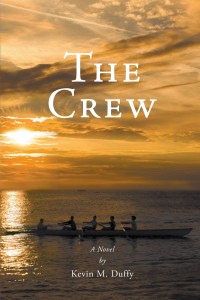
The first roadblock presented itself immediately. “Basically, I learned that if you wanted to go to a big publishing house, you had to have an agent,” my father told me recently. “And I wasn’t sure how to go about getting one. It’s almost like being an actor, where you need an agent to get auditions for you. But it’s still a matter of whether or not [the agent] would be willing to take you on as a client.”

My father’s analogy wasn’t too far off the mark. Many publishing houses don’t accept unsolicited manuscripts, and they almost always want to speak to a literary agent first rather than to the authors themselves, especially if the author is unpublished. Finding an agent was essentially an extra audition process that my dad didn’t want to bother with.

So instead, he turned to a little company by the name of Page Publishing.

Comments closed

Editing as a Writer: What I’ve Learned

Posted by Christie Tiberio, GD CNF Reader for 3.2

After many weeks of deliberation, the student editors of SUNY Geneseo’s Gandy Dancer have narrowed down submissions to our final selected works for the upcoming Spring issue! We are excited to present our sixth issue, particularly because of the extended effort of time, energy, and creative problem solving that was needed in order to bring the magazine to completion. As a writer, I learned a lot about the selection and editing process. It was interesting to see how a piece would or wouldn’t work in the context of the selected submissions, due to issues of style or format. In some cases, small revisions were needed—the placement of a space break or description, a more precise title. Once these small edits were made, the piece was ready for copy-editing.

Comments closed