Posted by David Beyea, CNF Reader for 8.1
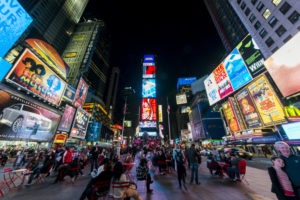 It seems odd to refer to a piece as being a clear love letter to the art of literary form. Isn’t that just a pompous way of saying that it is well-written? Perhaps not. In this issue of Gandy Dancer, Daniel Fleischman’s nonfiction short story “Metropolis” details the experiences of the author as he grew to accept life in New York City.
Certainly others have written of the city before, but there is a magnetism and finesse to Fleischman’s craft that elevates it from mere travelogue erotica. His pen is cast across the page with an unabashed exuberance; he frequently dips into descriptive prose and ruminates on not just the situations he finds himself in, but on the nature of civilization’s anthills. What does a city mean? It’s not really a question I ever considered, nor one that Fleischman explicitly answers. Unlike many authors describing a location, he does not attempt to solve the city, to have each element of it associated with some strong conclusion on the nature of life. Instead, he paints it.
Comments closed
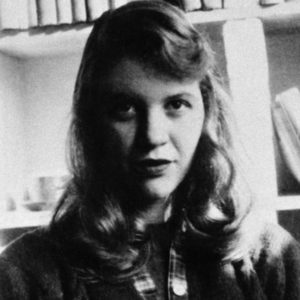 As a poet, I’m always looking for inspiration from other writers. I search for words, images, and techniques that I can borrow and make my own. So when I recently found myself in a writing rut, I dove into the poetry section of Barnes & Noble. Once I discovered Sylvia Plath’s poetry, I quickly noticed how it was riddled with enticing lines. Pen in hand, I jotted down every word or phrase that caught my eye. By the time I was finished, I’d read her poetry collections “
 The first books I remember actively reading were a series of children’s books called Dragon Slayers’ Academy by Kate McMullan. These goofy kids’ books kicked off a life-long love affair with the fantasy genre. I’ve read everything there is to read, from young adult fantasy like Harry Potter and Eragon, to classics like Tolkien’s Lord of the Rings, and even contemporary masterpieces like my all-time favorite book: The Name of the Wind by Patrick Rothfuss. All this to say that I have a significant personal bias for the genre, and genre fiction in general, and so I take offense to the way it’s often looked down on across academia.
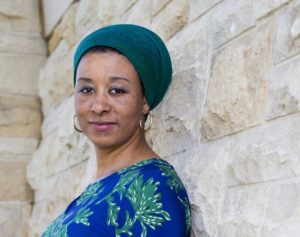 outlines the strange spaces she’s occupied as a result of being both African American and Muslim. (To hear more about this from the poet herself, check out her interview with